
Customizing Reference Architectures Live
- 30/10/2026
- Posted by: A Gable
- Category: Solution Architecture & Design
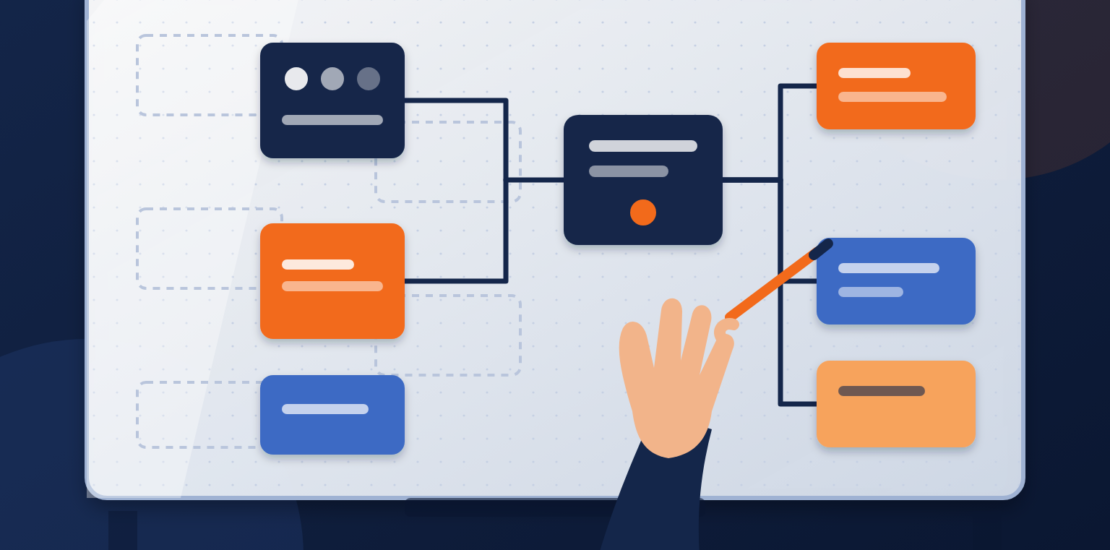
A prospect’s architect looks at your standard reference diagram and says, “That is not how our environment is organized.” The clean boxes you drew use your categories, not theirs, and every minute after that is spent defending a picture that does not belong to them.
Why generic diagrams lose trust
A reference diagram is a starting hypothesis, not an answer. Buyers trust diagrams that contain their own system names and team boundaries, because they can check them against reality. When you customize a reference architecture in front of them, you turn a vendor slide into a shared working document.
Prepare a reusable skeleton
- Keep the blocks generic and movable: identity, data store, integration, monitoring.
- Leave labels blank or editable so renaming costs seconds.
- Know in advance which blocks are fixed by your product and which can flex.
Redraw with their vocabulary
Ask three questions: “What do you call this system?” “Which team owns it?” “Where does data cross a team boundary?” Rename blocks with their words, group them by their teams, and draw boundaries where they say ownership changes. Narrate each change as you make it: “I am moving identity outside the platform box because your security team owns it.” Narration makes the edit visible and invites correction.
Protect the integrity of the design
Live edits can drift toward designs the product cannot support. Before moving a block, check it silently against your hard constraints. If a requested layout breaks one, say so immediately and offer the nearest supported alternative. Drawing something you will later retract costs far more credibility than a candid “not like that, but like this.”
Capture and confirm
Photograph or export the board before the session ends and send it within one business day with a one-line summary of what changed and why. The customized version becomes the artifact the champion circulates internally.
Decision and check
Decision: standardize one blank skeleton and the three ownership questions for every architecture session. Check: by the end of the session, the architect should be able to point at the diagram and say “that is our environment,” and the confirmed version should reach them in writing within a day. If you had to customize a reference architecture a second time because the first version was wrong about ownership, add a discovery question to your skeleton.
This micro-skill is part of the free SE Ignite curriculum, grounded in the Mastering the 80% philosophy of tech-agnostic engagement mechanics.