
Highlighting Architectural Guardrails and Fail-Safes
- 30/10/2026
- Posted by: A Gable
- Category: Solution Architecture & Design
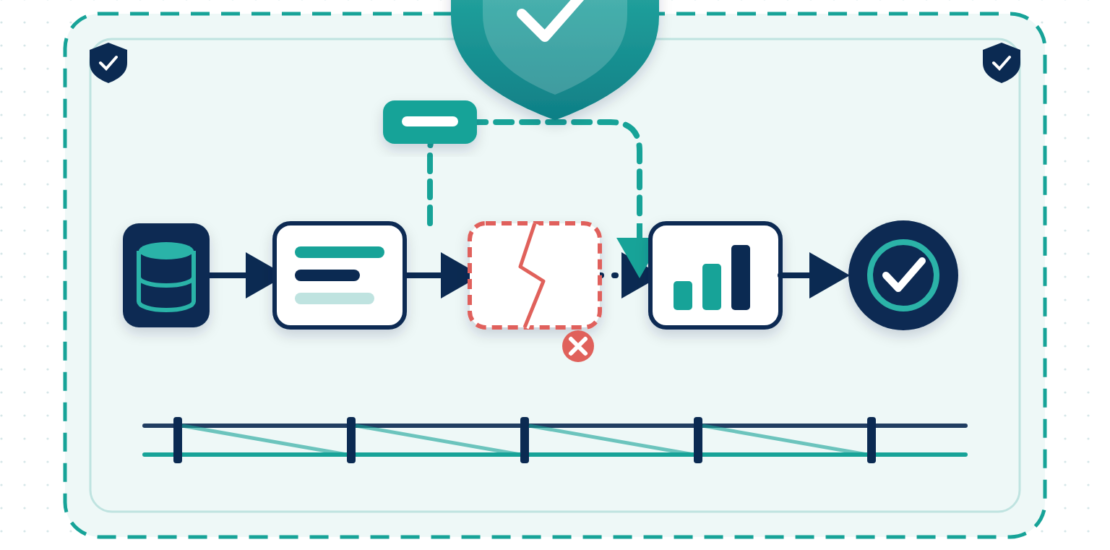
A security architect interrupts your diagram at minute twelve: “What happens when the queue backs up?” You pause, the room cools, and your clean happy-path story starts to sound like a brochure. This is the moment architectural guardrails earn their place in a presentation, and it is better to raise the question before the buyer does.
Why buyers distrust happy-path designs
Experienced architects have been burned by systems that worked in the demo and failed in production. When a Sales Engineer only shows success flows, the buyer fills the silence with their own worst-case assumptions. Showing failure handling up front signals that the design was built by people who have operated it.
Show three failure classes, in this order
- Bad inputs. Send one malformed record and show where it is rejected, quarantined and logged.
- Network partitions. Show what the system does when a dependency disappears: retry, queue, degrade or stop.
- Peak load. Show the limit, what gets throttled first, and what the operator sees.
Keep each to under two minutes. For each, name the guard, the fail-safe behavior and the signal that tells an operator it triggered.
Adjust depth to the room
For a site reliability team, go deep on recovery time and data loss limits. For a mixed audience, use one sentence per failure class: what breaks, what the system does, what the customer notices. In a 15-minute slot, pick the single failure the buyer cares about most from discovery.
Be honest about the edges
Name one limit you do not cover. A stated boundary (“we do not guarantee ordering across regions”) builds more trust than a claim of full resilience, and it lets you agree on scope before a proof of concept begins.
Decision and check
Decision: for every architecture walkthrough, prepare one slide or whiteboard that lists three failure scenarios and the architectural guardrails for each, plus what the operator sees. Check: after the session, ask the buyer to repeat back one failure scenario in their own words. If they can name the scenario and the system response, the design landed. If not, shorten the explanation and retry in the follow-up.
This is the kind of reusable mechanic SE Ignite teaches in its free curriculum, built around the 80% of solution engineering that does not change when the product does.