
Translating Security Controls into Risk Reduction
- 29/10/2026
- Posted by: A Gable
- Category: Metrics & Economic Levers
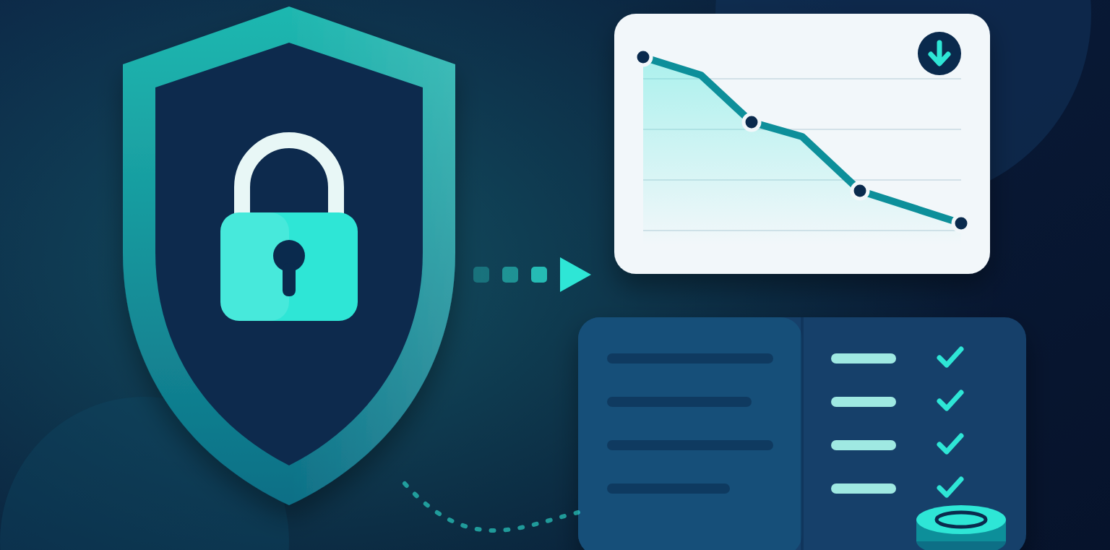
A CFO stops you in the middle of a security slide. “Audit automation, access reviews, encryption at rest. I do not buy controls. What do they save me?” If your answer is a list of features, the money conversation ends there, and the security line item slides to the bottom of the pile.
The problem this solves
Technical buyers speak in controls. Finance speaks in exposure. A control is worth only what it removes from the expected loss, and until you convert one into the other, security looks like a cost with no return. It is the first thing cut in a budget freeze. The SE is the right person to make the translation, because you know what the control actually prevents and what it does not.
Build the translation in three steps
- Name the event the control prevents, in one sentence: a failed audit finding, an unauthorised access incident, a data exposure.
- Get the buyer’s own cost for that event: audit preparation hours, fines, incident response time, customer notification. Use their numbers, and mark clearly what you assumed.
- Estimate how far the control lowers the likelihood or the impact, and say it as a range, never as a single figure.
The result is a statement of avoided breach costs that the buyer can challenge line by line. That is exactly what you want, because a number they have challenged is a number they own.
Keep the claim defensible
Never promise that an incident cannot happen. Say what the control reduces and what it leaves untouched. A finance leader trusts a conservative range far more than one dramatic number. For compliance automation, hours saved in audit preparation are the hardest dollars, so count them first and treat fines avoided as upside.
Where it goes wrong
- Quoting an industry-wide breach average as if it described this buyer.
- Stacking overlapping controls so the same loss is counted twice.
- Skipping the buyer’s security lead, who can correct your assumptions before the CFO does.
Decision and check
Before your next finance conversation, pick one control and write its translation on a single line: the event prevented, the buyer’s own cost, the expected reduction. The check is simple. The buyer’s security lead has confirmed the event and the cost, and the CFO can restate the avoided breach costs in their own words without your slide in front of them.
The free SE Ignite curriculum builds this habit through the 80% mindset: master the few translations that cover most conversations, then sharpen them with every deal.